If you’re wondering “what is radon gas”, the short answer is this: it’s a radioactive gas that forms in the ground and can enter your home without any obvious warning signs. The longer answer—and the more important one—is understanding how it behaves, where it comes from, and why testing is essential for homeowners in Saskatchewan.
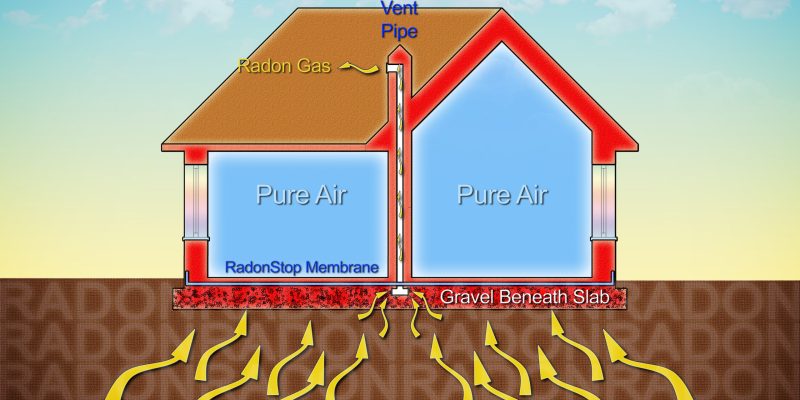
Radon is a radioactive gas in homes that forms naturally when uranium breaks down in soil, rock, and groundwater. As this process occurs, radon gas is released and moves upward through the ground, eventually reaching the surface.
Outdoors, radon is usually harmless because it disperses into the air. The problem begins when it becomes trapped inside a home.
At its core, radon is:
Because you can’t see or smell it, radon often goes unnoticed until it’s measured through proper testing.
Radon originates from the natural breakdown of uranium found in soil and rock beneath your home. This process happens everywhere, but certain regions—including Saskatchewan—have higher concentrations due to geology.
As radon gas is released, it moves through the ground and follows the path of least resistance. That often means entering homes through small openings in the foundation.
Even well-built homes can allow radon entry. It doesn’t require major structural issues—just small openings and pressure differences between the home and the soil.
Once radon enters a home, it can become trapped—especially during colder months when windows and doors remain closed.
Homes naturally create a slight vacuum effect, pulling air (and gases like radon) from the ground into the building. Without proper ventilation or mitigation, radon levels can gradually increase over time.
Because of this, even newer homes can have elevated radon levels.
Radon exposure is a serious long-term health risk. When inhaled, radioactive particles can damage lung tissue over time.
Health Canada identifies radon as the second leading cause of lung cancer, after smoking.
This is what makes radon different from many other home hazards—it doesn’t cause immediate issues, but prolonged exposure can have serious consequences.
Radon levels are measured in becquerels per cubic metre (Bq/m³). Health Canada recommends taking action if levels exceed 200 Bq/m³.
Testing is the only reliable way to determine whether your home has elevated radon levels.
Both methods provide valuable insights, but long-term testing gives a clearer picture of average exposure.
Understanding what radon gas is is the first step—but testing is what gives you real answers.
At Vent Pro Mechanical, we provide professional radon testing and mitigation services designed specifically for Saskatoon homes. If you’re unsure about your home’s radon levels, we can help you get clear, accurate results and guide you on what to do next.
Request a radon test or consultation today.
We begin with accurate radon measurement or HVAC system evaluation to understand your home’s condition.
Every home is different. We design a solution tailored to your layout, usage, and long-term goals.
Our licensed team installs systems cleanly and efficiently, following industry best practices and safety codes.
We don’t stop at installation. We verify performance and ensure your system continues working as intended.
At Vent Pro Mechanical Saskatoon, we provide trusted radon and HVAC services in Saskatoon designed to protect your home, your air, and your comfort. Reach out to us to get started!
Take the first step towards a healthier environment with our easy-to-use Radon Test Kits. Quick to deploy and highly accurate, they’re your first line of defense in detecting and managing radon levels. Don’t wait for peace of mind—order now and ensure the safety and well-being of your home or office.
No. Radon is completely invisible and odorless, which is why testing is required to detect it.
No. Both new and older homes can have elevated radon levels.
Radon is a long-term risk. Health effects are linked to prolonged exposure over time.
Yes. Saskatchewan is considered a higher-risk region for radon exposure.
Yes. Levels can fluctuate based on seasons, airflow, and structural changes.
The lower the level, the better. Action is recommended above 200 Bq/m³.